


Despite being a storyteller from a young age, Maya Jordan was unaware that she would, or even could, become a writer as an adult. It was not an option presented to her, a working class woman. In fact, it was something she was told people like her didn’t do.
“Growing up I didn’t know that being a writer was a job,” the author says. “I had no idea how you could become a professional writer.
“What I did know, what I was often told over and over, was that women like me didn’t write.”
However, Maya went on to complete a Masters in Creative Writing from the Open University. In 2021, she was selected to take part in A Writing Chance, a launch-pad programme for writers from working class and under-represented backgrounds.
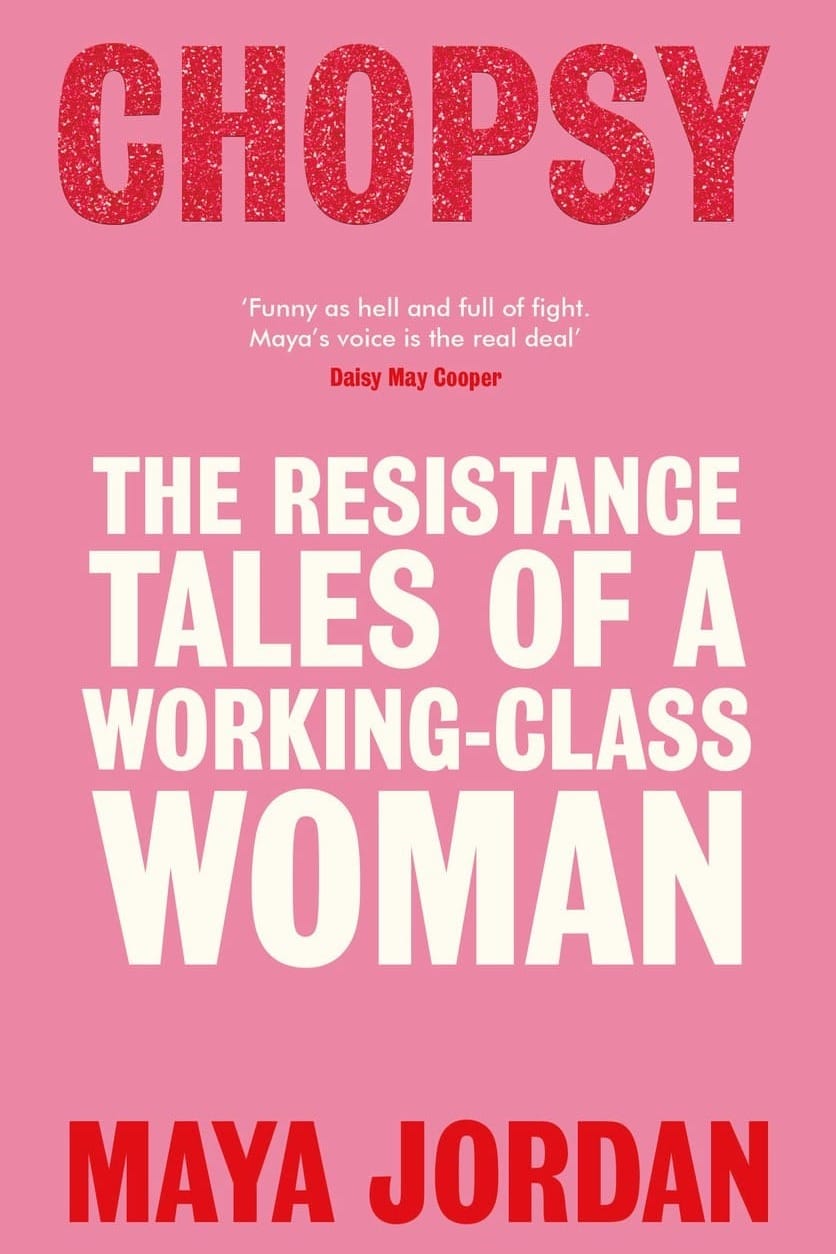
Published earlier this year, her memoir, Chopsy: The Resistance Tales of a Working-Class Woman has drawn acclaim for its humour and its punch.
Ahead of her Margate Bookie appearance, Maya tells Strange Tourist about how A Writing Chance unlocked her self-belief and why it’s important more working class voices are heard.
When did you realise your life experience was a story and not just stuff that happened to you?
I think all of us have stories about our lives. When you talk to people, when you listen, people have fascinating lives. I wrote my stories down because I didn’t see women like me in books, in art, in literature, and I didn’t want to believe that I was the only one, the only woman who felt like I did.
As a mum of six with various caring responsibilities, what was the process of writing Chopsy like and how do you find the time to carve out writing time?
I didn’t write seriously until all my children left home. I scribbled down stories in stolen moments. I told my kids stories, but I didn’t have the space, physically or mentally, to write with all my caring responsibilities. Back then, I still didn’t believe that I could write, that I was a writer.
Is there another memoir in you still to come or would you like to write fiction?
I am, by nature, a storyteller. I told my children stories and then went into schools and told more children stories. My first novel is about a working class woman who used to be the goddess of the River Severn but has forgotten. (Michael Sheen performed the opening chapter on the BBC’s Margins to Mainstream with Micheal Sheen.) I’m just starting my third novel, which is about a middle-aged Teaching Assistant who suddenly gains a Pooka – a Celtic spirit of mischief. I would love to see my fiction out in the world.
You were chosen to be part of Micheal Sheen and New Writing North’s A Writing Chance programme, which supports working class and under-represented writers. What other doors did A Writing Chance open for you?
[While in the programme,] I was made to believe that I was a writer, almost like immersion therapy. That made such a difference. From there, I worked freelance, writing a fortnightly column for The Mirror’s online parenting magazine Lemon-aide. I’ve written for magazines and journals, run writing workshops and storytelling events. A Writing Chance gave me the confidence to see myself as a writer and journalist.
Which authors, books and stories do you see yourself reflected in?
I love the representation in Eloise Williams children’s books, and if I had read those as a little girl, I might have felt there was a place in the world for girls like me. I should also mention books by Victoria Bennett, Jenny Knight, and classics like Pat Barker.
The arts are increasingly only accessible by people with some financial backing. What effect does that have on the working class stories being told?
Often, working class women and in particular middle-aged working class women, are only seen in stories as the victims, never the heroines. We’re there to keep it gritty or as the butt of a joke. Working class culture is not one thing; it's nuanced, and we often don’t see that in stories.
How can we create more entry points for diversity within publishing and for stories told from different perspectives?
I’m not sure I have a solution, but I think it has to start in education. Too many working class kids are still told to lower their expectations. Children and young people need to see that publishing and the arts are industries that are open to them. We all watch TV and films and read stuff online. We need to hear all of our stories. To do that we have to support the arts in education for all young people, not just for the select few. We also then have to provide an income for those creatives who do not have the safety net of family financial support.
What are you working on now?
Too many things. My third novel about the Pooka. A book of women’s meditations linked to the symbolism of trees. I’m toying around with writing a memoir of my street and the people who live there, so I’m just starting interviews and I need to write a Christmas story for my grandsons. But I also seriously struggle with my health so it all has to be managed around that.
How well do you think Michael Sheen will do in The Traitors?
Can I tell you a secret? I can’t watch Traitors. I get far too anxious. Michael is a kind and generous person, but he is also a brilliant actor, so I could easily see him doing well.
Maya Jordan will be discussing her memoir, Chopsy: The Resistance Tales of a Working-Class Woman as a guest of Margate Bookie on Saturday, October 17 at 10.30am at Turner Contemporary. Tickets £12 (use the code STRANGE to get a third off).
Want more? Subscribe to our newsletter for a hit of arts, culture and fun things to do around Thanet and beyond in your inbox every Saturday morning.


