


“Times have been tough for a lot of people for a long time,” says Stephen Miller. “[But] whose interests does it serve if we all believe these problems are unsolvable?”
It is with this in mind that Stephen and Elinor Seath co-founded the Festival of Optimism, which takes place in locations around Thanet this October. The three day event will highlight positive stories and actions.
Programming seeks out the positives to be found in health, climate science, journalism, community, food and more. Even time travel. And as a final event, you’ll be able to channel all of the positive energy you’ve built up onto the dancefloor for a special edition of the Optimissimo club night.
Stephen explains where the idea for the festival came from, why we need it, and how, in 2026, being optimistic is “a political act.”
What’s the idea behind the Festival of Optimism?
A couple of years ago I attended a conference about 'inclusive growth and regional development', where expert after expert talked about how poorer parts of the UK can close the gap on London. And yet this conference was being hosted in Mayfair, one of the richest neighbourhoods in Europe, with very little representation from any of the communities being discussed! So I started wondering aloud what it would be like to host a conference within the communities affected by the issues being discussed, and rather than viewing them through a deficit-lens, showcase their strengths and all the great work already happening within those communities to address those challenges.
Eli Seath was also developing a similar idea to showcase the great work happening in placemaking, including showcasing her own project running the UK's first pilot of an Experience Improvement District (XID), which puts people and planet at the heart of place regeneration. Both of us agreed that, despite great adversity, many communities respond to the challenges they face not with despair, but with optimism. They believe things can get better, and then they make it happen. That's why we called it the Festival of Optimism.
What has the response been since the announcement of the festival?
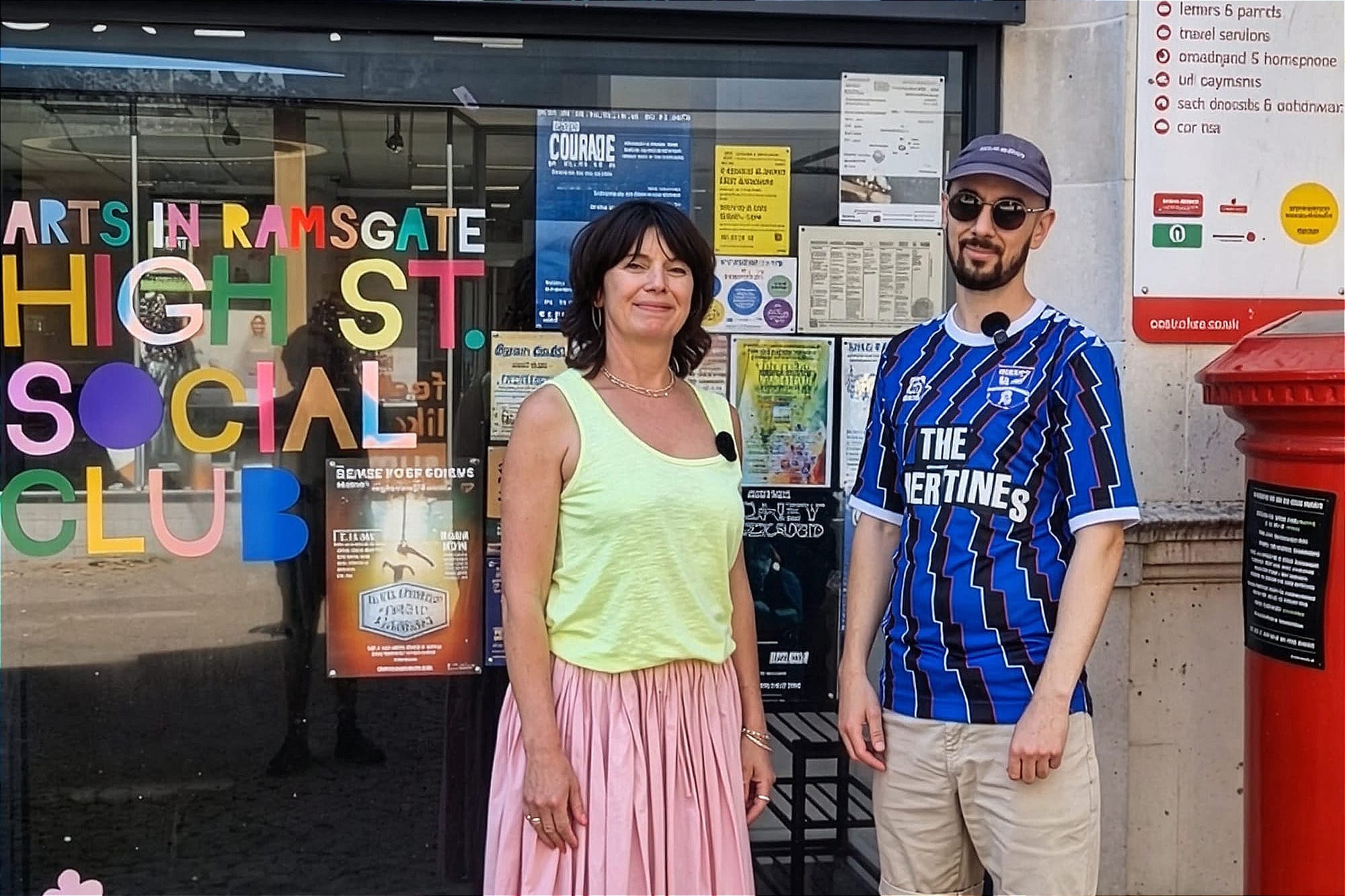
Incredibly positive. We trialed the idea for a while to test the waters, and lots of people told us it's exactly what is needed at the moment. Since we launched we've been inundated with ideas and suggestions for content and workshops, and the response online to our videos (particularly those where we've gone around Thanet to ask people what makes them optimistic about the future) has been incredible.
There's so much positive energy and a can-do spirit here in Thanet, but we've also attracted attention from around the world, including recently completing another interview for the Centre of Optimism in Australia. For the Festival itself we've got people travelling from all across the country to be here too - from Birmingham and Brighton, and even folks coming over from Devon.
Do you think the world has become more pessimistic? How do we break free of that?
Times have been tough for a lot of people for a long time. If you feel like you're constantly fighting fires, or living hand to mouth, it can be very difficult to think positively about the future. And at a national and international level, there's been a lack of inspiring visions about what the future could look like and where we're heading. Even the conversation about AI has flipped from 'this is going to liberate us' to 'this is going to enslave us'.
Whose interests does it serve if we all believe these problems are unsolvable? That the status quo should just persist, and we should all live in misery? In these contexts, optimism becomes a political act. Believing that things can change is the first step to them actually changing. And it's not being unrealistic or naive to say this - the proof is around us all the time, with communities across the country rolling up their sleeves, getting stuff done and addressing the challenges they and their neighbours face head on, all fuelled by a belief things can be better. Fuelled by optimism.
The festival launches a year after you co-founded club night Optimissimo. What’s the connection between the two?
I was talking to Luke at Margate Arts Club about the idea for this festival, and we got to discussing how dancing is great for enabling people to break free from the daily grind, and connect with strangers in a different, more positive way. The science is strong too now about the benefits of dancing as a form of active psychological release and facilitating community belonging. It loosens up your mind and imagination, and it becomes slightly easier to imagine that things might be different.
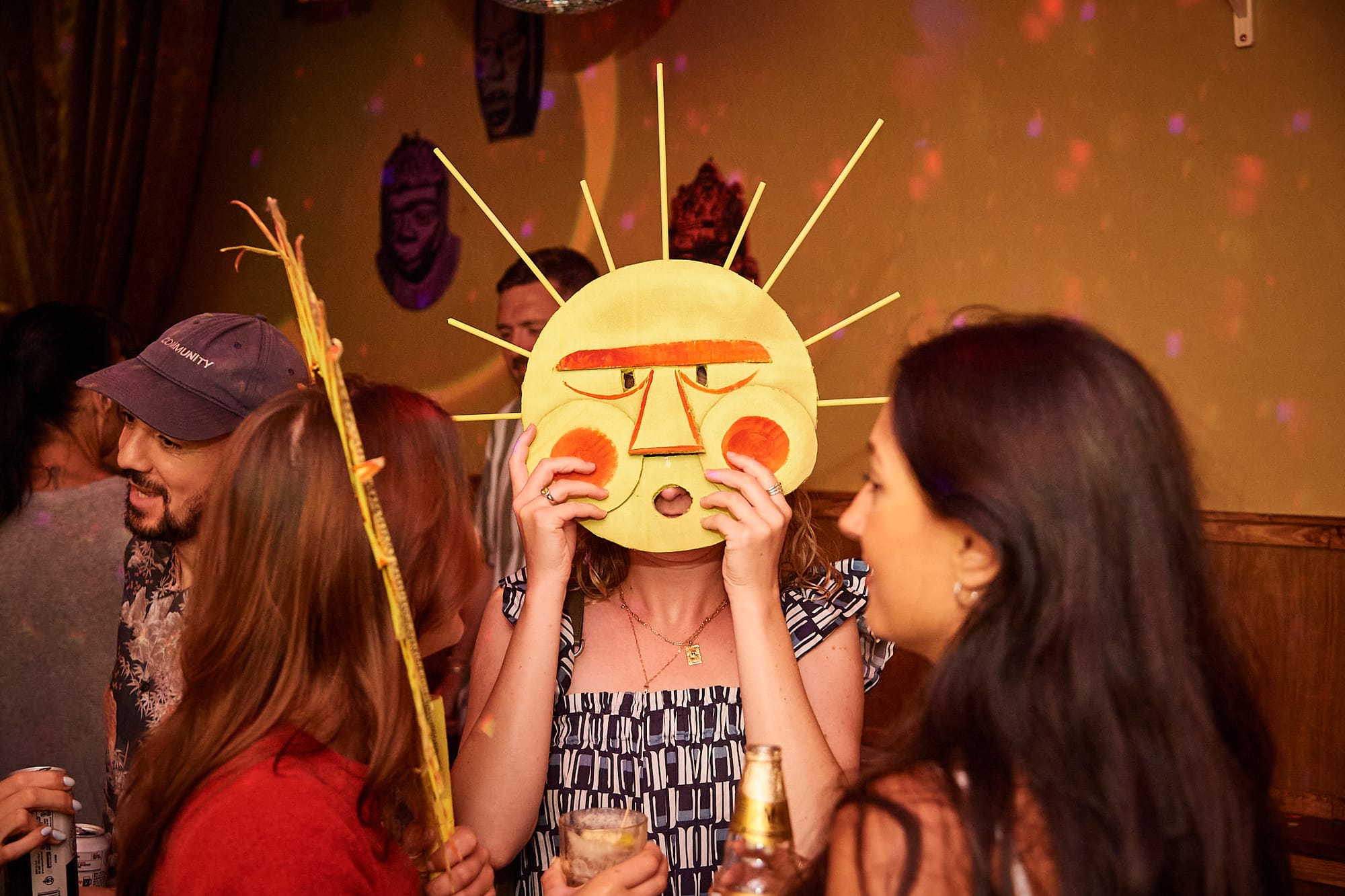
So with Noel Leeman, I set up Optimissimo as a place to let loose and celebrate life. We try to recreate a festival vibe each time, and the response has been great - we've had people feed back not only about how much fun they've had, but also about how welcome they've felt and the people they've met.
What makes you optimistic?
Both Eli and I have worked alongside communities for many years, myself as a social researcher and Eli through her work in cultural placemaking.
As a researcher I'm often exploring challenges - from poverty and economic inequalities, to the effects of climate change on people's lives. Yet time and again over the past 20 years, I keep encountering inspiring and entrepreneurial individuals and organisations tackling these issues head on. Often they are starting from a disadvantaged position with limited resources, and yet are able to use what they have, and bring people together, to deliver solutions.
More than this, they're also developing new ideas and innovations to try and stop these issues from occurring again - from community-led housing which provides warm, safe modern homes that also lower energy bills, to food and farming organisations that put healthier, cheaper food on people's plates whilst also offering farmers and producers a better deal, to community-owned renewable energy that redistributes it profits to the community rather than shareholders - there are lots of great things happening that are often going under the radar.
I suspect that's because good news doesn't sell as well as bad news, but we all know bad news is always the exception. That's why it's newsworthy! The norm, as I've seen time and time again, is people helping and supporting each other to address the issues they face. It may not always get the clicks and views it deserves, but it is happening everywhere, every day. Which is why I remain optimistic about the future.
How do you go about programming a festival with such a broad remit?
We knew in advance that we primarily wanted to showcase the amazing work that is happening in communities here in Thanet and across the country. We identified six thematic areas where this work seems particularly strong or interesting - climate action, community development, food and farming, health and wellbeing, housing and land, and local economics. But we also knew we didn't want to be the sole arbiters of what optimism means, and so invited expressions of interest for talks and workshops.
We were pleasantly overwhelmed by the response! So many people submitted ideas and suggestions we never would have thought of, and we're really pleased to have been able to programme some of these, including Clare Inkster and Sam Furness on the art and science of optimism, and a whole crew of local journalists talking about the importance of local media to a thriving community (of which this newsletter is a great example!)
What makes Thanet a good setting for this festival?
There's a reason Madonna described it as “heaven”! Not only is it a beautiful setting, but there's a very strong sense of community and entrepreneurialism here. People are very friendly, always looking out for each other, and have a real can-do attitude. There remain lots of complex challenges here but time and again across the district, you see individuals and organisations trying to address these, make life better for each other and create an inspiring future.
What are you particularly looking forward to in the programme?
There are so many great speakers and workshops, but I'm particularly excited to see Rob Hopkins [pictured above] in his time machine. He's come back from the near future and apparently it's great, because we all got our acts together now and did what needed to be done to make things better for people and planet.
We've also got a great workshop about how communities are taking over neglected buildings and spaces and returning them to community use, with the journalist and author Hazel Sheffield in conversation with Victoria from People Dem Collective. What makes this even better is that these conversations are happening within buildings saved by the community - in this case PDC's new space on Harold Road, whilst the rest of the day on Thursday is hosted at Ark, which was also saved by the local community.
On the Saturday we've got lots of free 'experiences' programmed too, including the Margate We're Dreaming Of exhibition (which was co-designed by Naturehood with the local community), a volunteering day at the new Art Garden hosted by Margate Pride, and a great workshop imagining the future of high streets, being hosted at Ramsgate Space.
Do you envision this becoming an annual event?
Obviously we're optimistic that this will become an annual event. So many people came forward with ideas that we weren't able to accommodate this time, and the response from others across the country has given us confidence that there's a need and desire for this. We've learnt a lot programming this one, and we aim to be back bigger and better next year.
The Festival of Optimism takes place in venues and locations around Thanet on October 1-3. See the full programme and book tickets.
Lead image: Rob Hopkins by Alice Carfrae


