


A building steeped in local history, Margate's Printworks on Union Crescent has been many things since it was first built in 1870. Now, it has entered yet another new chapter thanks to interior designer Paul Andrews who has spent close to two years turning the former headquarters of the Isle of Thanet Gazette into his home and studio.
Working across commercial and residential design, Paul began looking for a site after filming an episode of BBC One's Interior Design Masters with Alan Carr in 2021 in Margate, when he was seduced by the town’s enigmatic charm.
"It just appealed to me creatively," says Paul. "Margate has got this unique combination of heritage and creative energy. There's a real sense of reinvention happening here and when I started thinking about this project, it felt aligned with all of that momentum.
"I suppose [Margate] got my juices flowing," he adds.
He began home-hunting in earnest in 2023, asking to look at the Margate buildings "people don't want".
"I wanted to take on something that would be a challenge and to put my own stamp on it," he says. "The building had to become a full-scale expression of my design philosophy."
Looking at places in Westgate, Margate and Cliftonville, Paul settled on Margate Old Town as a location, drawn to the area’s particular creative energy.
"In such a small space, you get different neighbourhoods," he explains. "And they've all got the same creative energy, but with subtle differences."
Paul made an offer on Printworks the day he looked at it, drawn to the building's industrial integrity and "the opportunity to reimagine the space".
"It's rare to be trusted with a building that holds so much local history," he says. "My aim was to honour that legacy while proving that thoughtful interior design can completely reimagine how a space is lived in."
Purpose built for the Isle of Thanet Gazette over 150 years ago, it was later used by other companies and clients, including the east Kent department store Bobby & Co until the end of WWII. Publishers Eyre & Spottiswoode took over the building in 1947, leading to a boom in the local industry.
The building became part of The Thanet Press, a bigger complex of printing operations across several buildings. Printworks itself continued to house the Isle of Thanet Gazette editorial until around 2009.
Since then, the building has been home to architect firms, a doctors studio, Curve coffee roasters, artist studios and Union Yoga, while sections of the larger printing complex have become part of the Carl Freeman Gallery and Tracey Emin's studio.
Paul - who also set up Margate Interiors Collective, a design-led network of around 25 people working across various interior-related professions - didn't want to erase this history, going on to say that good interior design isn’t about replacing history, it's about editing it.
"I didn’t view it as a conversion," he says. "I viewed it as more of a continuation. So rather than erasing the building’s past, you get to extend its story.
"To be trusted with something that's got so much history was way beyond my wildest dreams."
He set about turning Printworks into a sanctuary and creative headquarters for himself. His design concept was bedded in working with the building’s history, "celebrated" raw materials and was led by Printworks' industrial bones.
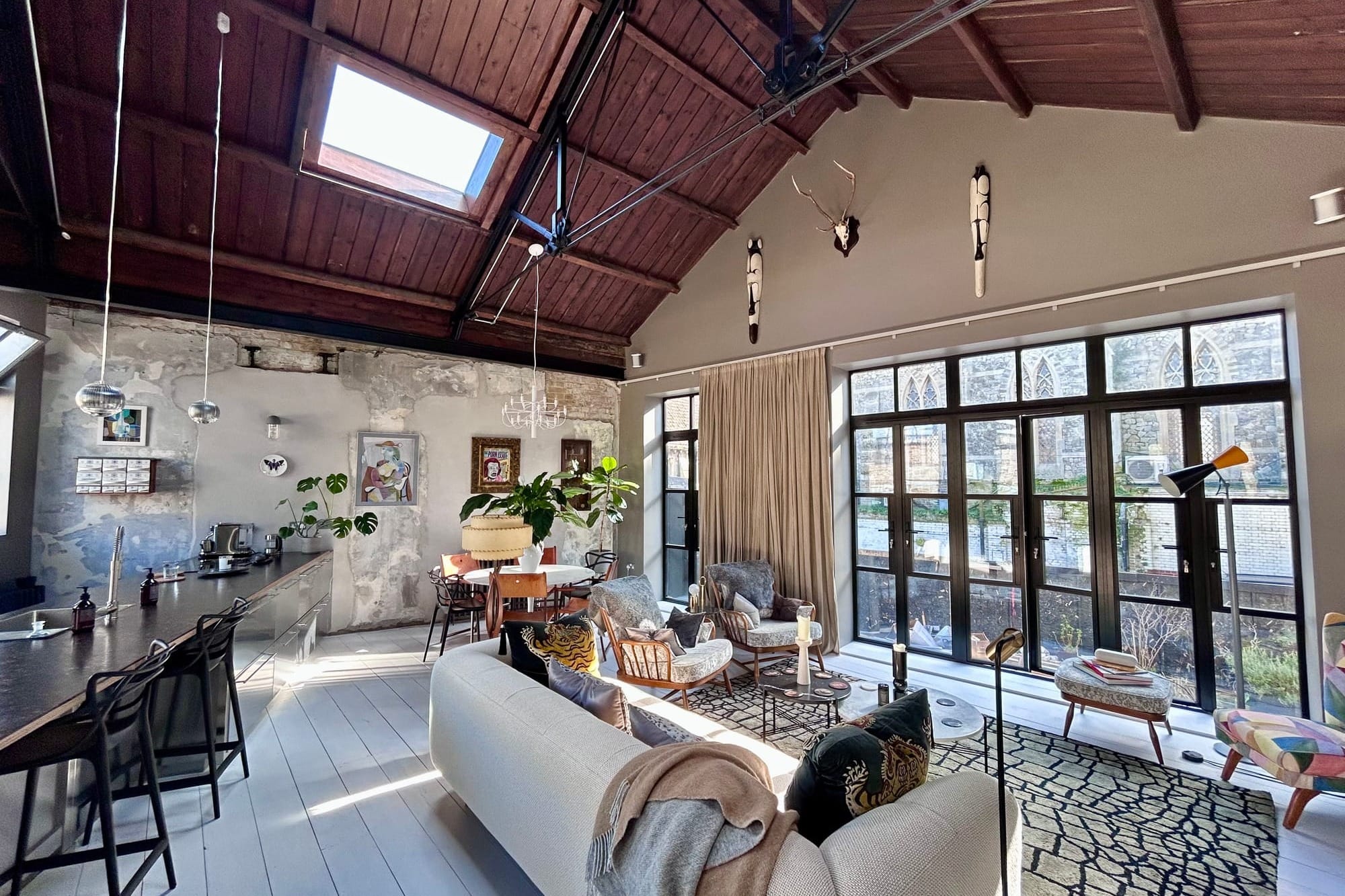
In practical terms, that meant retaining as many structural elements as possible - joists, timber, brickwork, concrete. With a ceiling six metres high and "big, big, big proportions", Paul wanted to respect Printworks' scale and not domesticate it too heavily.
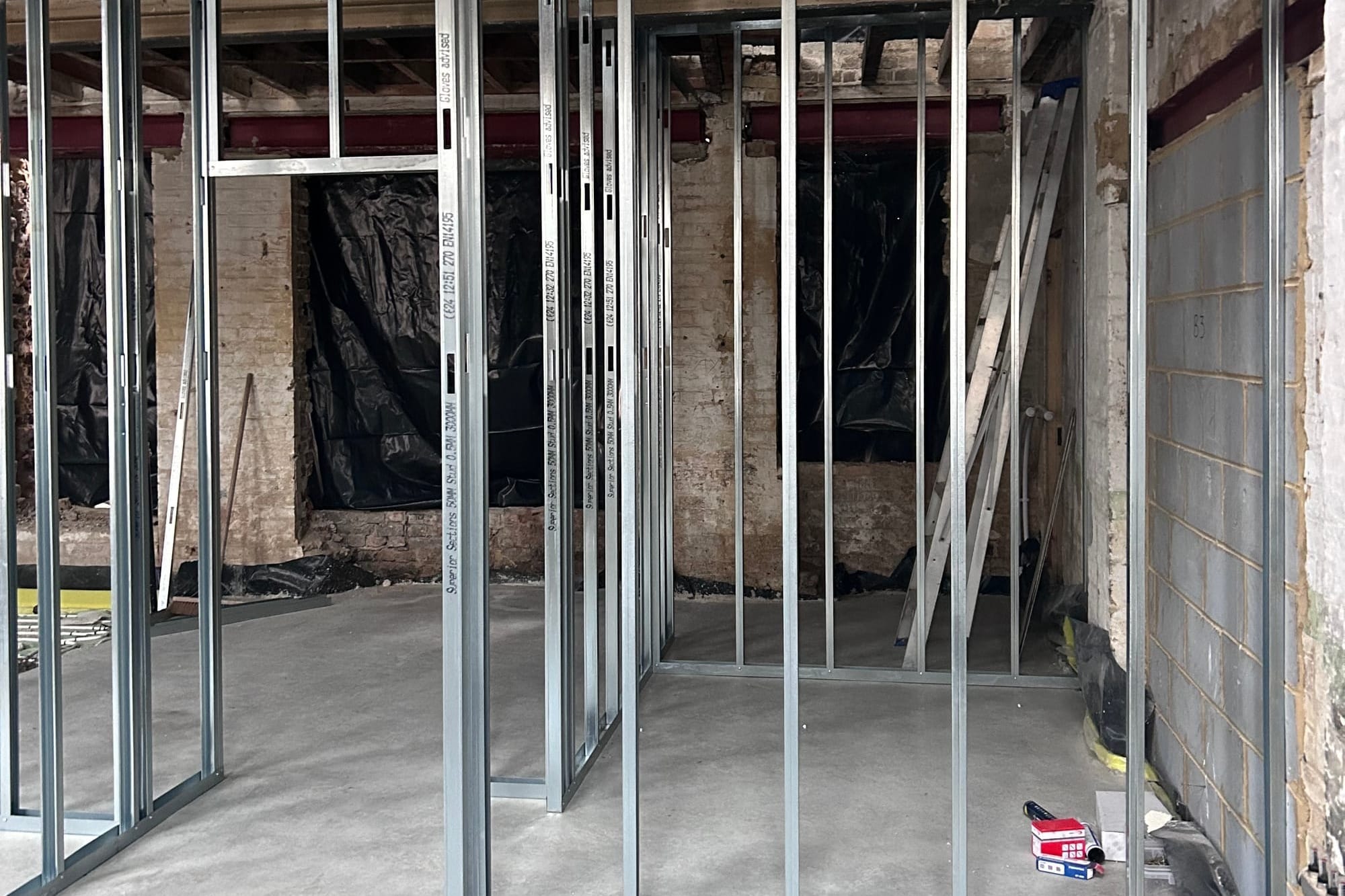
Working with former Printworks residents Meme Architects, the layout was reconceived, taking the building from a commercial space into a residential one, which Paul says was one of the biggest challenges of the project.
"Industrial buildings are not designed for domestic flow," he says. "It required really careful spatial planning to retain the character and make it function as a home."
When he took on the building, it was an open plan yoga studio with lots of mirrors on the ground level and a printing press upstairs. There was no staircase, no electrics and no toilets between the floors. Five drafts later, the floorplan was reimagined as an open plan living, kitchen and dining room on the first floor, and a hallway, three bedrooms, two bathrooms, a utilities room and studio on the ground.
As part of the reconfiguration, the back of the building was opened up to take advantage of its south facing perspective. The front door was repositioned with a new one made to look exactly the same as the others, keeping in line with the original facade.
A double height void space was created by taking out part of the first floor, creating a roughly 12 metre view from downstairs through to the upstairs, and a bespoke metal and walnut staircase was created.
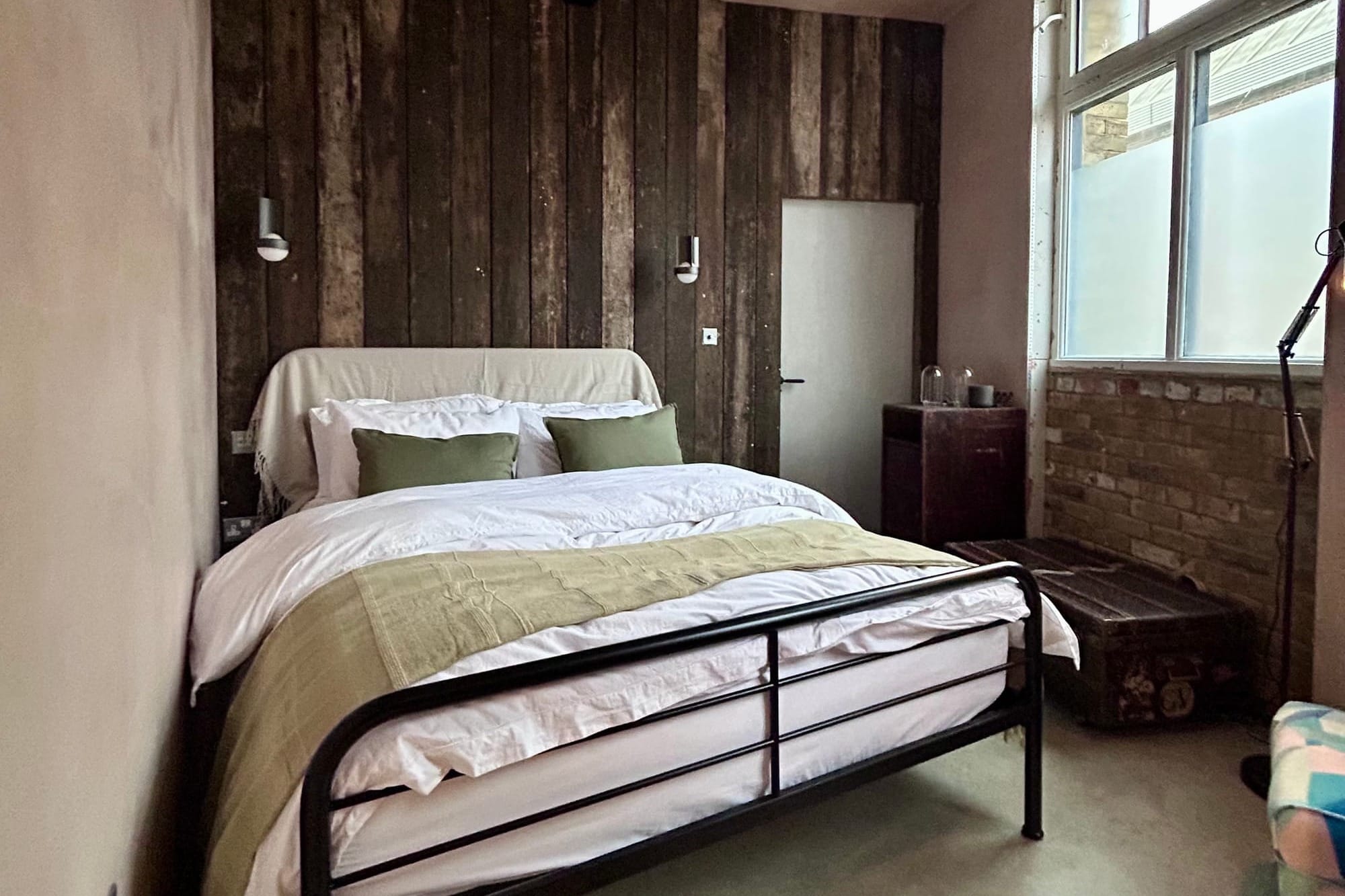
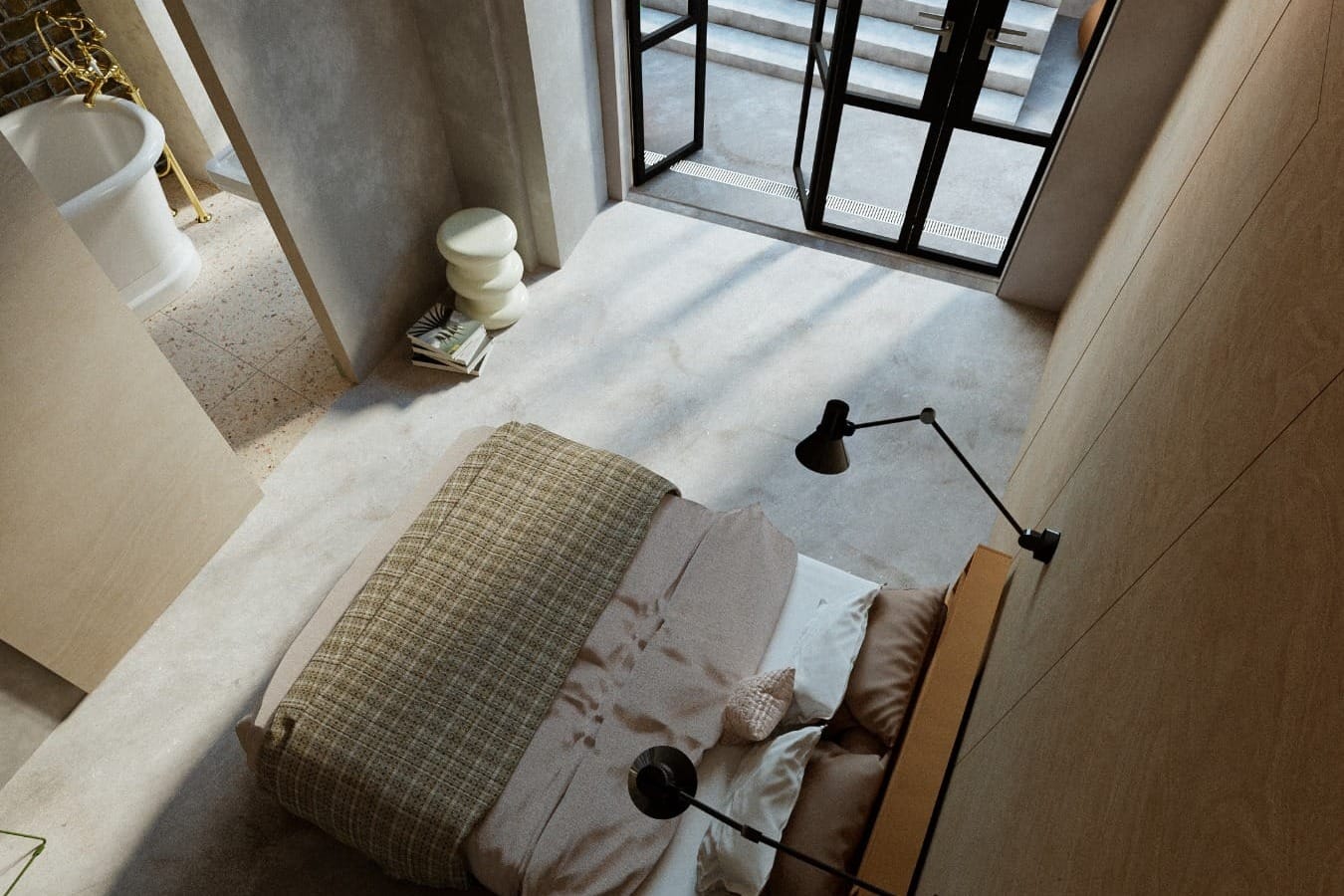
Underfloor heating was laid across the ground floor which was then covered in polished concrete. The main bedroom, which comes with an ensuite and dressing room, sits at the back of the house, while the guest bedroom and bathroom has its own private entrance.
In order to keep the upstairs ceiling's original features, including its timber and metal rolled steel joists, Paul removed the roof to lay insulation. He also reopened the ceiling's boarded up skylights, keeping their original positions.
"The ceiling inside is the original [from] 1870," he explains. "I've been able to keep all of that without having to actually touch it. It was in such amazing condition for the age of it. It's had a bit of finessing, but other than that, it's pretty much as it's always been."
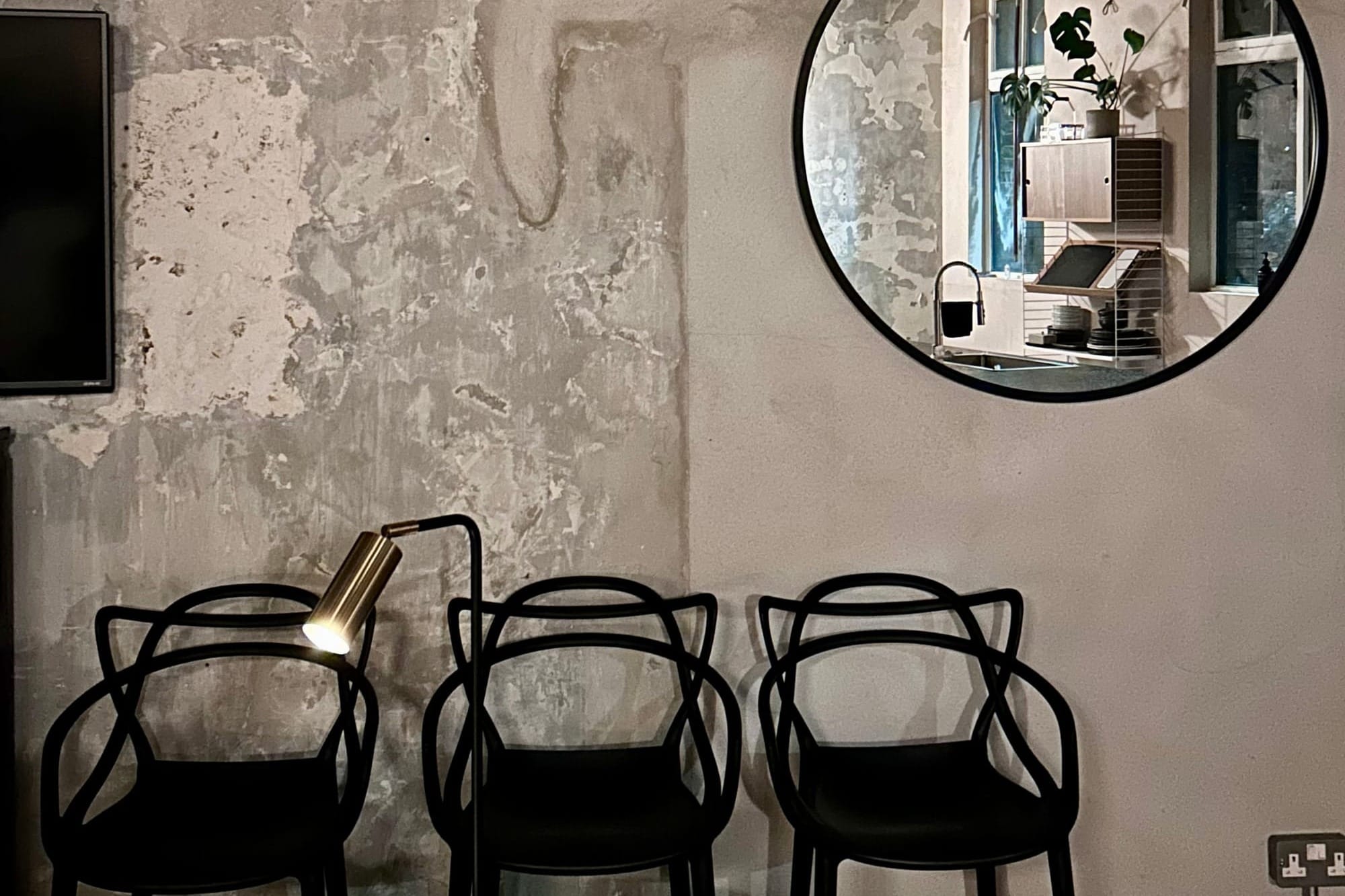
The building's remaining original timber, metalwork, brick and concrete informed the materials, textures and colours and materials Paul introduced to the interiors.
"You put all those elements together and you've already got a colour palette," he says.
"The structural elements give you a lot of texture and colour and warmth," he continues. "That then dictated the joinery and carpentry that came into the building, so it echoed the natural aesthetic."
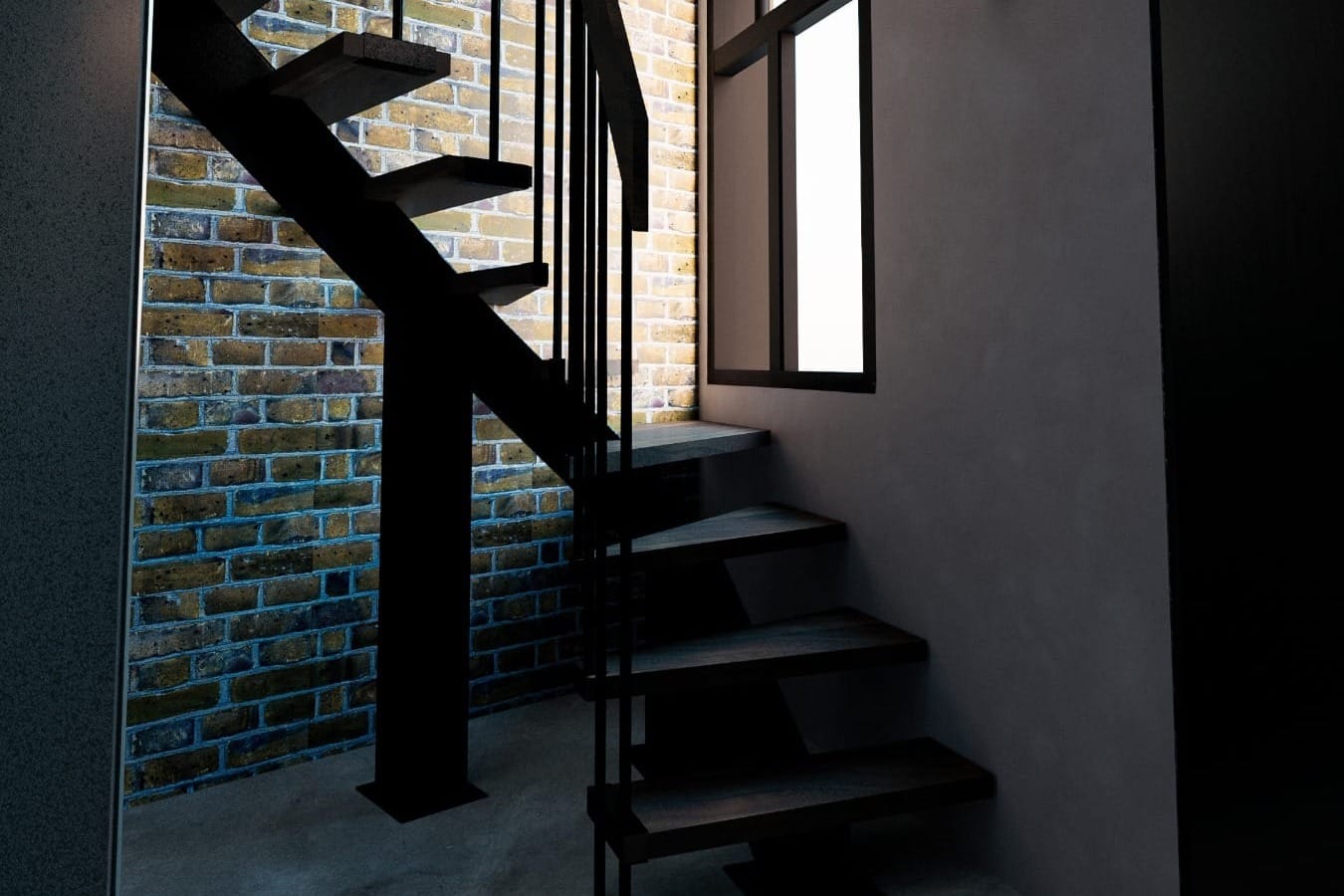
Informed by Printworks' original yellow bricks and the original lime render, a coastal colour palette has been used in the interiors. Paul originally conceived adventurous colours throughout his new home. However, after considering the natural light now flooding in through the skylights, and inspired by spring and autumnal coastal walks, he paired his colours back.
"There was so much to think about," he says of his time spent in the throes of the build. "[Those walks were a way] of processing my thoughts."
As a result, he settled on a pallette inspired by "the colours and the tones of the sky and the sea and the landscape on autumn and spring days, when everything was just fading into the background a little more."
He continues, "Once we'd done the strip out and I started to see the raw materials, then that became a combination you could celebrate, where you could take the muted tones and the raw materials and merge those together."
To balance out the grand scale of the upstairs ceiling, the light greyish concrete walls and to add warmth to the now light-flooded room, Paul used a dark earthy colour on the north and south walls. He he brought this through to the staircase and void space, while introducing a light green-grey downstairs.
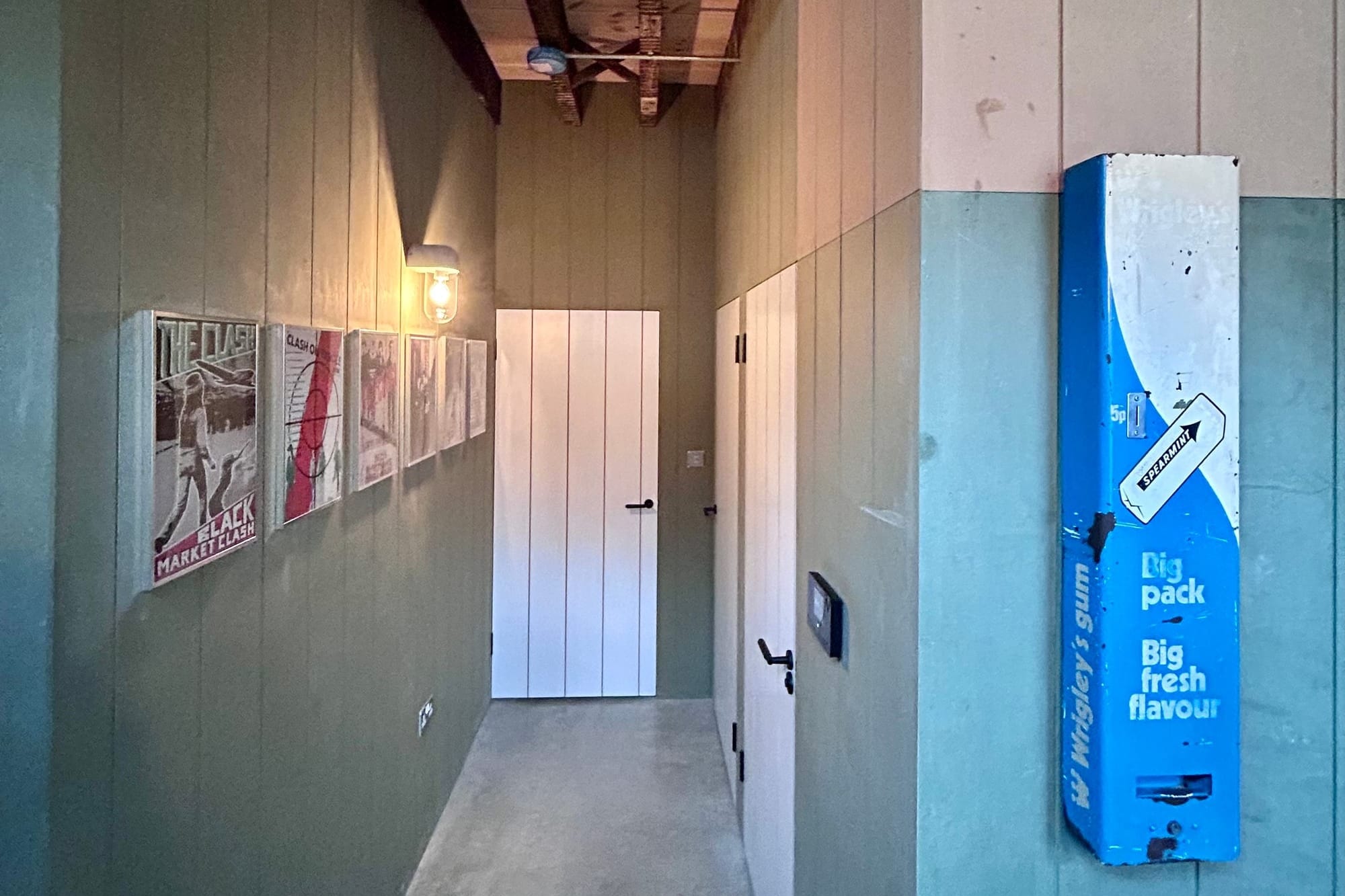
Keeping a natural flow of colour between the floors, the ceiling joists on both levels have been exposed, and the concrete upstairs is balanced with the downstairs' polished concrete floors.
Paul moved into his new home in December, and says it’s "amazing" to be living in the space. It's the first time he’s been able to have all his furniture, art, and stuff like the vintage chewing gum machine he bought at a car boot while at university.
"I've got loads of different objects and little weird things; I like things in jars," Paul says. "It's almost like curating a space.
"Everyone says it's eclectic," he continues, talking about friends' thoughts on his home. "Things that shouldn't work, work together, which even I've been surprised by."
He goes on to say that when all the elements come together, is when any interior design project becomes a home for the client.
"In this case," Paul says, "I'm the client."
Find out more about Paul and his work on his website.
Want more? Subscribe to our newsletter for a hit of arts, culture and fun things to do around Thanet and beyond in your inbox every Saturday morning.


